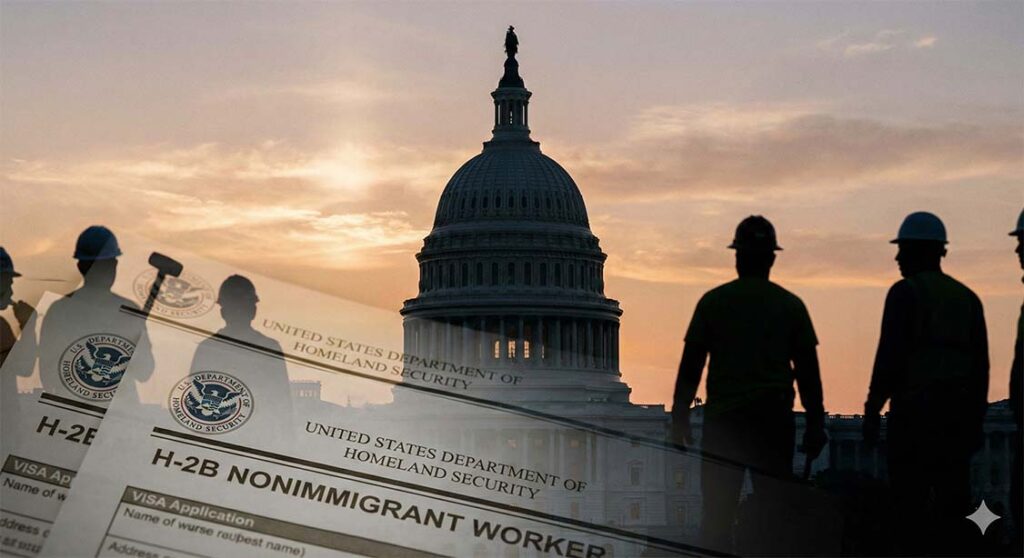
If you’re a foreign worker eyeing seasonal opportunities in the United States or a U.S. business struggling with staffing gaps, 2026 just got a lot more promising. The H-2B visa increase 2026 brings welcome relief through a major nonimmigrant visa expansion that could nearly double the number of available spots for temporary non-agricultural roles. Announced via a temporary final rule on January 30, 2026, this policy directly addresses persistent labor shortages in industries that keep America’s hospitality, landscaping, tourism, and event sectors humming.
In this practical guide—written like a friendly immigration advisor—we’ll walk through everything you need to know. You’ll learn the basics of the H-2B program, exact details of the 2026 changes, real impacts on workers and employers, comparisons to other visas, actionable H-2B application tips, and answers to common questions. Whether you’re a hospitality pro from Mexico, a student looking for summer work, or an employer planning for peak season, this guide gives you a clear, step-by-step roadmap to make informed decisions. Let’s dive in.
Key Points
- The H-2B visa increase 2026 adds up to 64,716 supplemental visas on top of the standard 66,000 annual cap, potentially doubling available spots for temporary non-agricultural workers.
- Most supplemental visas prioritize “returning workers” from recent years, with the first allocation (18,490 visas for January–March starts) already reached as of February 6, 2026.
- Employers must prove irreparable harm without these workers and follow strict wage, attestation, and compliance rules—no major shifts to eligibility or pay standards beyond the cap expansion.
- This US temporary worker visa 2026 boost helps industries like hospitality, landscaping, and forestry amid ongoing shortages, but opportunities depend on timely applications and lottery outcomes where oversubscribed.
- Workers can expect seasonal roles lasting up to 3 years total, with prevailing wages that protect U.S. labor standards.
Why the H-2B Visa Is Trending in 2026
Seasonal businesses have faced tough labor shortages for years, worsened by post-pandemic recovery and major upcoming events like the U.S. 250th anniversary celebrations and international sporting highlights. The standard H-2B cap of 66,000 visas fills up fast—often within days for the second half of the fiscal year—leaving employers scrambling.
That’s where the H-2B visa increase 2026 steps in. On January 30, 2026, the Departments of Homeland Security (DHS) and Labor (DOL) jointly issued a temporary final rule authorizing up to 64,716 additional visas for fiscal year 2026 (October 1, 2025–September 30, 2026). This brings the potential total to roughly 130,716 spots, a lifeline for businesses and a golden window for workers.
What will you learn here?
Clear explanations of the program, precise policy updates, salary expectations, preparation steps, and smart comparisons to alternatives like Canada’s programs or UAE work permits. By the end, you’ll have a roadmap to navigate this US temporary worker visa 2026 opportunity confidently.
What Is the H-2B Visa?
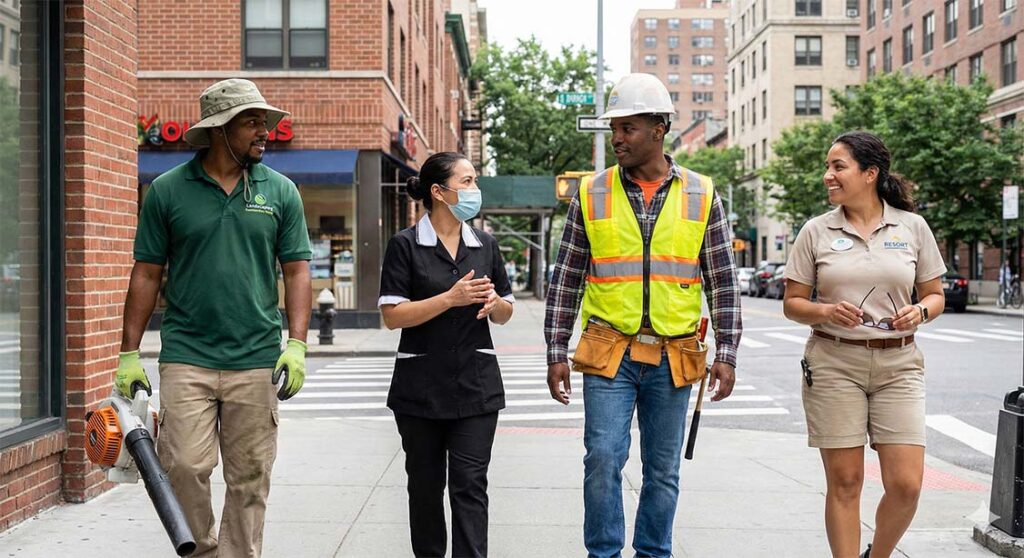
The H-2B visa is a nonimmigrant classification that lets U.S. employers bring foreign nationals to the United States for temporary non-agricultural jobs when they can’t find enough qualified, willing, and available U.S. workers.
Who it’s for: Foreign workers outside the U.S. (or in limited change-of-status cases) who meet basic requirements—no specific degree needed, but they must be able-bodied and intend to return home after the job ends.
Common industries: Landscaping and groundskeeping, hospitality and resorts, construction support, forestry, seafood processing, amusement parks, housekeeping, and event staffing. Think ski resort maintenance in winter or beach hotel staffing in summer—roles that spike seasonally.
Key features:
- Job must be temporary (seasonal, peak-load, one-time, or intermittent).
- Employers prove no adverse effect on U.S. workers’ wages/conditions.
- Maximum stay: Up to 3 years total (with possible extensions in 1-year increments). After 3 years, workers must leave for at least 60 consecutive days before reapplying.
- No direct path to permanent residency (unlike some skilled visas), but experience can help future applications.
Real-world example: A family-owned hotel in Florida hires H-2B housekeepers and maintenance staff every summer because local workers prefer year-round jobs elsewhere. Without this visa, rooms might stay unmade and guests disappointed.
2026 Policy Changes & Expansion

The headline is the cap increase, but let’s break it down with details.
Visa Cap Increases:
- Statutory annual cap remains 66,000 (33,000 per half-year).
- Supplemental visas: Up to 64,716 additional, distributed in three allocations to match different business needs.
- 46,226 reserved for “returning workers” (those issued H-2B visas or granted status in FY 2023, 2024, or 2025).
- 18,490 open to any qualifying workers for late-season needs.
Here’s a clear table of the allocations:
| Allocation | Number of Visas | Eligible Workers | Employment Start Dates | Filing Window Notes |
|---|---|---|---|---|
| First | 18,490 | Returning only | Jan 1 – Mar 31, 2026 | Cap reached Feb 6, 2026; lottery used for excess petitions |
| Second | 27,736 (+ unused from first) | Returning only | Apr 1 – Apr 30, 2026 | Opens ~15 days after second-half statutory cap reached |
| Third | 18,490 (+ unused from prior) | Any workers | May 1 – Sep 30, 2026 | Opens ~45 days after second-half cap; deadline Sep 15, 2026 |
In short, returning workers get priority in the first two allocations, while new applicants have better chances in the third window.
Process Changes: New attestation form (ETA-9142-B-CAA-10) requires employers to attest they will suffer “irreparable harm” (permanent/severe financial loss) without the workers and retain supporting evidence (contracts, financial statements, payroll records) for 3 years. Random selection (lottery) if oversubscribed. Petitions filed at specific USCIS lockboxes with “Attn: FY2026 H-2B Supplemental Cap.” Premium processing available.
Wage Rules & Eligibility Updates: No fundamental changes—employers must pay the highest of: prevailing wage (DOL-determined for the occupation and area), federal/state/local minimum wage. Wages paid “free and clear” biweekly or per local practice. No prohibited recruitment fees charged to workers. Eligibility open to nationals of all countries (no country caps on supplementals this year). TLC (temporary labor certification) from DOL still required first.
These updates make the program more responsive while maintaining strong worker protections.
Impact on Workers – Opportunities, Salaries & Realities

For foreign applicants, the H-2B visa increase 2026 means more chances than ever, especially for returning workers who bring experience and lower training costs for employers.
Salary Expectations: Prevailing wages vary widely but often range $14–$25+ per hour depending on role and location (e.g., higher in high-cost areas like California resorts). Employers must offer at least this rate, plus transportation, housing (if provided), and benefits matching U.S. workers. A landscaper in Texas might earn $16–18/hr for 40+ hours/week during peak season.
Opportunities: Seasonal work that builds skills, earns U.S. dollars (often sent home as remittances), and allows return year after year. Many workers repeat for 3 years, gaining reliability with the same employer.
Real-world context: A worker from Central America returns annually to a Colorado ski resort, earning enough in 6 months to support family back home while enjoying structured employment with legal protections.
Challenges include visa interview wait times, travel costs, and the need to leave after the job ends. But with caps expanded, rejection rates due to numbers (not qualifications) drop significantly this year.
Returning workers (those who held H-2B status in FY 2023–2025) get priority in the first two allocations. New applicants have a shot in the third for late-season roles. Common industries include resorts, construction support, seafood processing, and event staffing. Salaries follow DOL prevailing wage rules—typically the highest of local market rates or minimum wage—to ensure fairness.
Implications for Employers – How to Prepare & Stay Compliant
U.S. businesses facing staffing crises now have breathing room, but compliance is non-negotiable.
Preparation Steps:
- Secure DOL Temporary Labor Certification (file 75–90 days before need).
- Prepare irreparable harm attestation with evidence (keep it detailed but private until audited).
- File I-129 promptly in the correct allocation window.
- Use only approved recruiters and maintain records.
Compliance Tips: Pay prevailing wages on time, provide required transportation/housing, and cooperate with any DOL or DHS audits. Violations can lead to petition denial, debarment, or fines.
Example: A Maine lobster processor that missed the regular cap last year can now petition under the third allocation for summer workers, proving lost contracts without them.
Employers who act early and document everything will thrive under this nonimmigrant visa expansion.
Comparison to Other Work Visas
H-2B vs. H-1B: H-1B targets specialty occupations requiring a bachelor’s degree or equivalent (e.g., IT engineers, accountants) with a 65,000 + 20,000 cap and up to 6-year stays. H-2B is for non-skilled temporary labor—no degree needed, shorter duration, different cap. H-1B often leads to green cards; H-2B does not.
H-2B vs. Canada Temporary Foreign Worker Program (TFWP): Canada’s TFWP requires a Labour Market Impact Assessment (LMIA) proving no Canadian worker available—similar to DOL certification. It covers more job types, can lead to permanent residency pathways faster, and has no hard annual cap like H-2B (though streams vary). Processing can be quicker for high-wage roles, making Canada attractive for longer-term stays. See our Canada vs USA immigration comparison for a deep dive.
H-2B vs. UAE Work Permits: UAE employment visas are employer-sponsored, typically 2–3 years, require medical tests and clean records, and tie workers closely to one sponsor. No seasonal cap system—easier entry for skilled roles but stricter on job changes and with heat/climate considerations. Great for tax-free income in a modern hub, but less “temporary seasonal” flexibility than H-2B. Explore our Canada vs UAE immigration comparison if weighing options.
In short, H-2B excels for short U.S. seasonal gigs; choose based on your skills, desired duration, and long-term goals.
Tips for Applicants – Practical H-2B Application Tips
- Start Early: Work only with legitimate U.S. employers who have approved DOL certifications.
- Avoid Scams: Never pay recruiters upfront fees (prohibited). Check DOL’s Foreign Labor Recruiter List.
- Prepare Documents: Valid passport (6+ months), job offer, proof of ties home, and interview readiness.
- Timelines: Expect 3–6 months total—from job offer to visa stamp. Monitor USCIS cap alerts.
- Errors to Avoid: Missing allocation windows, incomplete attestations on employer side, or overstaying.
- Boost Chances: Highlight prior U.S. experience if returning; learn basic English for interviews.
Pro tip: Premium processing ($1,780 fee) speeds USCIS review to 15 days—worth it for time-sensitive starts.
Is H-2B Worth It in 2026? (Pros & Cons)
For seasonal workers evaluating short-term U.S. opportunities, the expanded 2026 cap makes H-2B more attractive than in previous years. However, it’s important to weigh both benefits and limitations.
### Pros
- Higher visa cap in 2026 (better approval chances)
- Prevailing wage protection
- Strong seasonal earning potential in USD
- Opportunity to return for up to 3 years
### Cons
- No direct pathway to permanent residency
- Lottery risk if oversubscribed
- Temporary stay limit (maximum 3 years)
- Dependent family members cannot work
Frequently Asked Questions (FAQs)
Is the H-2B visa increase 2026 Permanent every year?
No—it’s temporary, time-limited authority that expires after FY 2026. Future years depend on congressional action.
Can I apply directly as a worker?
No—U.S. employers must petition on your behalf after DOL approval.
What if the allocation fills up?
Unused visas roll over; later allocations or regular cap (if available) may still work. Check USCIS alerts weekly.
How much can I earn?
At least the prevailing wage for your job and location—often $15–$25+/hr plus benefits. Exact rate listed in the job order.
Does H-2B lead to a green card?
Not directly, but years of experience can strengthen future employment-based petitions.
Conclusion & Next Steps
The H-2B visa increase 2026 represents a smart, targeted nonimmigrant visa expansion that balances employer needs with worker protections. With expanded caps, focused allocations, and strong wage safeguards, it creates real opportunities for seasonal work in the U.S. while helping businesses avoid financial harm.
Next Steps for Interested Readers
Workers should connect with vetted U.S. employers early; employers need to prepare labor certifications and harm documentation now. Always verify details on official USCIS and DOL sites, as processing times and caps can shift. Key takeaways: Act fast on remaining allocations, prioritize compliance, and explore returning-worker advantages. For workers, this could mean reliable income and valuable experience; for employers, a stable workforce.
Ready to explore alternatives?
Read our Canada vs USA immigration comparison for longer-term options north of the border, or check the Canada vs UAE immigration comparison if sunny, tax-free opportunities appeal more.
For official updates, always verify details on USCIS.gov and DOL.gov. The 2026 H-2B window is competitive—start preparing your documentation today.