If a global conflict ever escalates into World War 3, many people start searching for the safest countries if World War 3 happens. Which places in the world would remain stable and secure during a large global conflict?
- What Would Happen If World War 3 Started
- Key Factors for Evaluating Safety
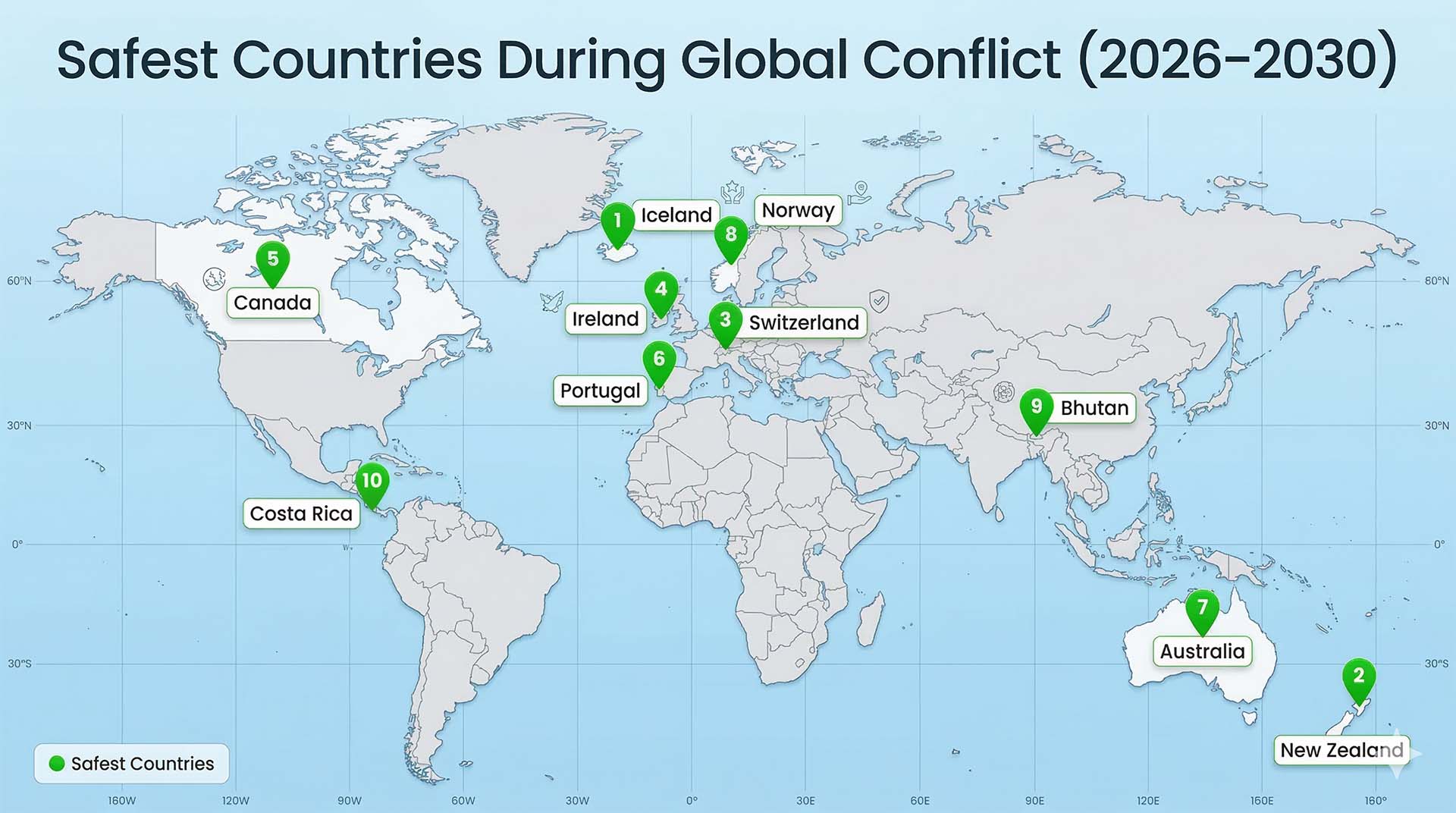
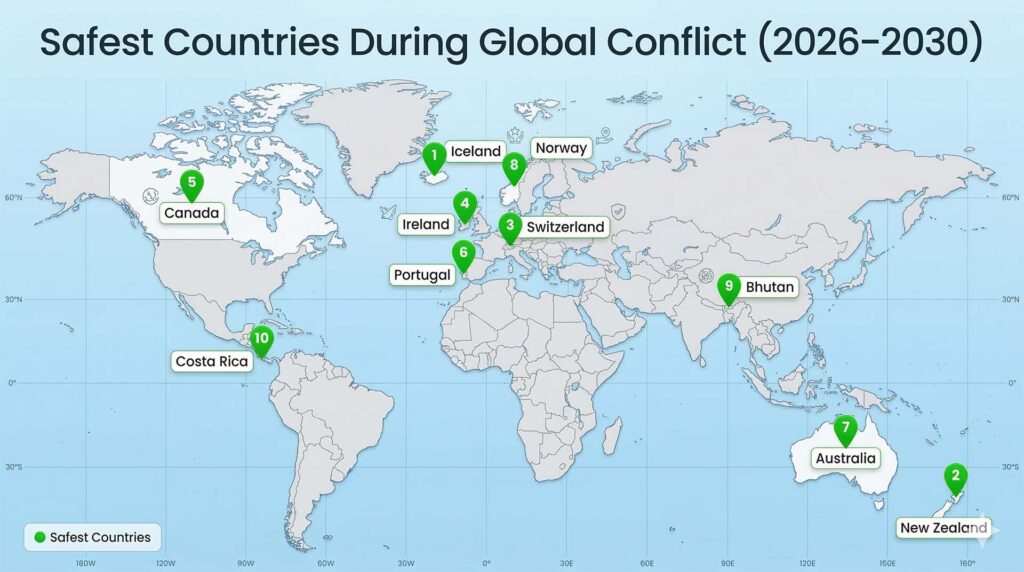
- Top 10 Safest Countries
- Comparison Table
- Future Outlook
- Conclusion
In recent years, global tensions have been increasing. From conflicts in Eastern Europe to political disputes in the Asia-Pacific, many people are starting to ask an important question: Which countries would be safest if a large global conflict or World War 3 ever happened?
While no place in the world is completely risk-free, some countries are considered safer because of their geography, political neutrality, strong economies, and distance from major conflict zones.
In this guide, we’ll explore the top 10 safest countries if World War 3 happens between 2026 and 2030. We will compare them based on factors like political stability, natural resources, immigration opportunities, and overall safety.
Whether you are planning to move abroad, looking for a secure place to live, or simply curious about global stability, this guide will help you understand which countries may offer the most security in uncertain times.
What Would Happen If World War 3 Started?
If a global conflict escalated into World War 3, the effects would likely be felt across the entire world. Modern warfare is not limited to traditional battlefields. It could involve cyber attacks, economic sanctions, energy shortages, and disruptions to global trade.
Some possible consequences could include:
- Global supply chain disruptions
- Shortages of food, fuel, and essential goods
- Major economic instability in many countries
- Increased migration as people search for safer places to live
Because of these risks, many people today are asking which countries might remain relatively stable and secure during a global conflict.
Key Factors for Evaluating Safety in a Global Conflict
When people talk about the safest countries during a global conflict or World War 3, several important factors come into play. No country can be completely safe in a large-scale conflict, but some places have advantages that make them more stable and secure.
Below are some key factors that help determine which countries might remain safer during global tensions.
Political Neutrality
Countries that stay politically neutral often avoid getting directly involved in major wars. Neutral countries usually do not join military alliances or take sides in global conflicts.
A well-known example is Switzerland, which has maintained neutrality for more than two centuries. Because of this policy, it managed to stay out of both World War I and World War II.
Neutral countries often focus on diplomacy, mediation, and peacekeeping instead of military expansion.
Military Strength or Defense Alliances
Strong defense systems can also help a country stay safe. Nations with well-trained militaries or strong defense partnerships are often better prepared to protect their borders.
However, being part of large military alliances can sometimes increase risk, because allies may be drawn into conflicts together.
Geographic Isolation
Geography plays a major role in safety. Countries that are far away from major conflict zones usually face lower risk.
For example, island nations or countries located in remote regions—such as those in the South Pacific or the North Atlantic—may have a natural advantage because they are harder to reach and less strategically targeted.
Economic Stability
A stable economy helps a country manage crises more effectively. Nations with strong economies, diverse industries, and stable governments can better handle disruptions such as trade problems or supply shortages.
Countries with strong financial systems and long-term economic planning tend to remain more resilient during global uncertainty.
Natural Resources and Food Security
Access to natural resources is another important factor. Countries that produce their own food, energy, and freshwater are less dependent on international supply chains.
For example, nations with strong agriculture, renewable energy, and abundant natural resources are usually better prepared to sustain their populations during global disruptions.
Immigration Friendliness
Finally, immigration policies also matter. Some countries make it easier for skilled workers, investors, and families to move there.
Countries like Canada, Australia, and New Zealand use points-based immigration systems that attract skilled professionals from around the world. During global instability, these policies can make them attractive destinations for people seeking safety and opportunity.
Together, these factors create a clearer picture of which countries may offer the most relocation options amid fears of a broader conflict. Why? History tells us that during World War II, neutral havens like Switzerland shielded millions from direct harm, while today’s interconnected world amplifies risks from cyber attacks, supply chain stability and security in uncertain global conditions.
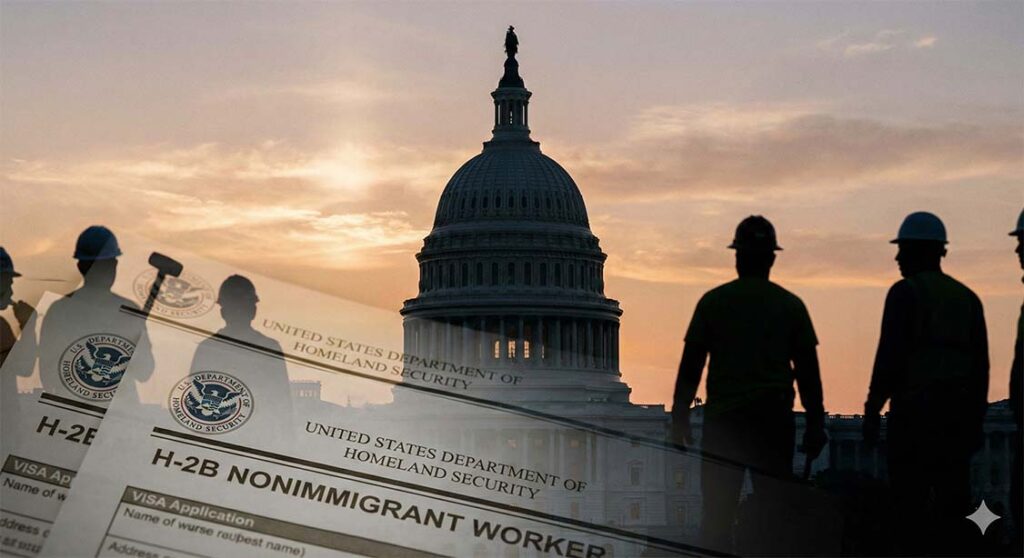
People looking for temporary work opportunities in the United States can also explore the H-2B visa program, which allows foreign workers to work in seasonal industries.
Top 10 Safest Countries If World War 3 Happens
Quick Overview
In recent years, global tensions have been increasing…
Based on factors like political stability, geographic location, economic strength, and immigration opportunities, some countries appear safer than others during global conflicts. While no place in the world can be completely risk-free, certain nations have natural and political advantages that make them more stable during uncertain times.
Below are five of the safest countries that experts often mention when discussing global safety and long-term stability.
1. Iceland
Overview
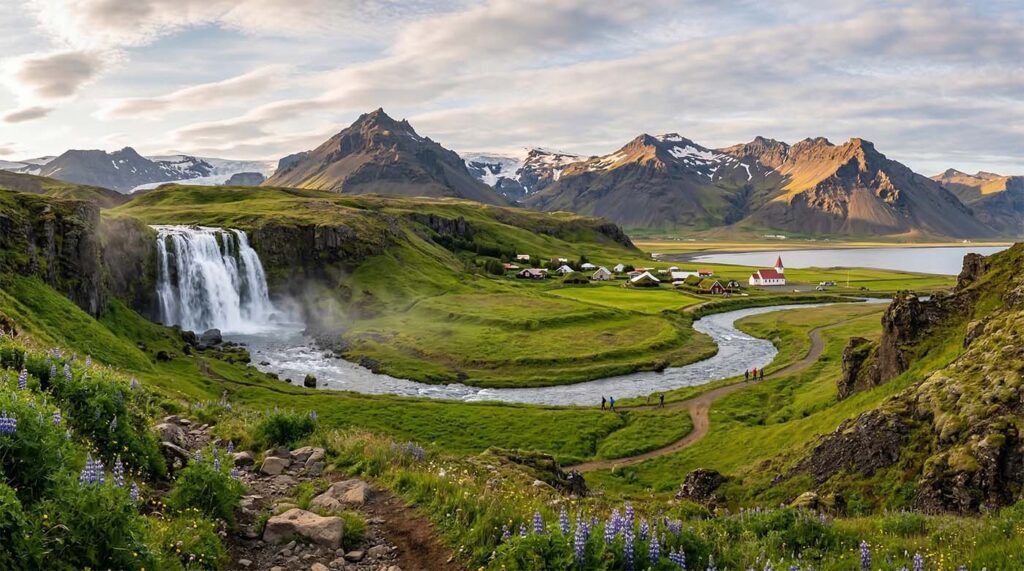
Iceland is a small Nordic island nation with a population of about 380,000 people. Despite its small size, the country consistently ranks as one of the most peaceful places in the world. In fact, Iceland has ranked #1 on the Global Peace Index for more than a decade, making it the most peaceful country globally.
The country is also known for its volcanic landscapes, glaciers, and strong renewable energy system.
Why Iceland Could Be Safe
One of Iceland’s biggest advantages is that it does not maintain a standing army, which makes it less likely to be a military target during global conflicts.
In addition, Iceland’s remote location in the North Atlantic Ocean, about 1,000 km from mainland Europe, provides a natural geographic buffer from many potential conflict zones.
Political Position
Iceland is a member of NATO, but it does not operate its own military forces. Instead, the country focuses on peacekeeping missions and international diplomacy.
Iceland is also known for maintaining strong diplomatic relations with many countries, which further contributes to its political stability.
Geographic Advantages
Iceland’s location in the North Atlantic makes it geographically isolated from major geopolitical hotspots.
Another important advantage is energy independence. More than 85% of Iceland’s energy comes from renewable sources, mainly geothermal and hydropower. This reduces dependence on foreign energy supplies during global crises.
Immigration Opportunities
Iceland offers residence permits for skilled workers, researchers, and entrepreneurs. The country has also introduced digital nomad visa programs that allow remote workers to live in Iceland temporarily.
Although immigration opportunities exist, the country’s small population means the job market is relatively limited compared to larger economies.
Pros
- Ranked #1 on the Global Peace Index for several years
- One of the lowest crime rates in the world
- Over 85% renewable energy production
Cons
- High cost of living (average monthly expenses can exceed $3,500)
- Small job market due to limited population
- Long and cold winters in northern regions
2. New Zealand
Overview
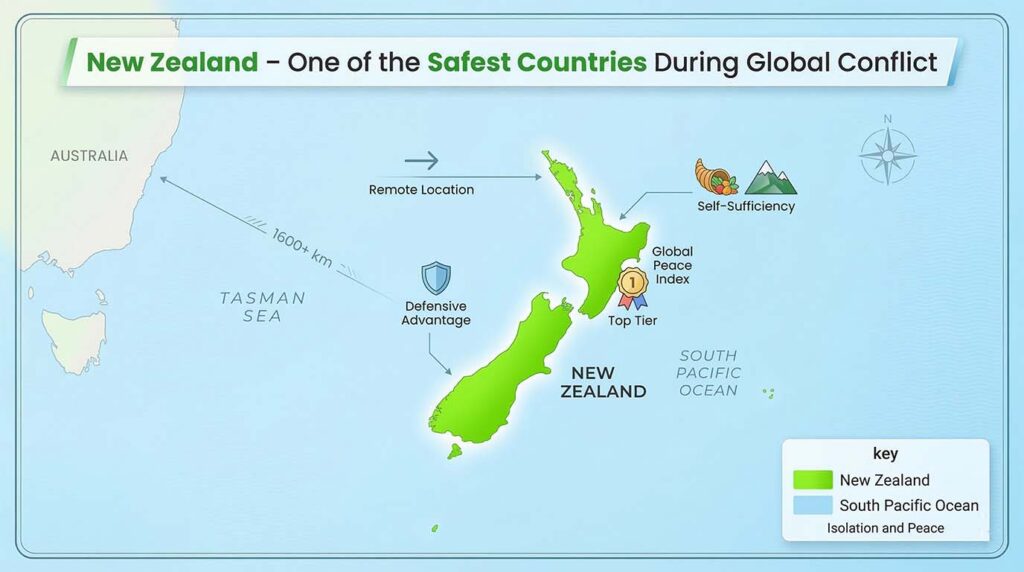
New Zealand is an island nation located in the South Pacific Ocean with a population of around 5.2 million people. The country is widely known for its breathtaking natural landscapes, stable democratic government, and high standard of living.
According to the Global Peace Index, New Zealand consistently ranks among the top 5 most peaceful countries in the world, making it one of the safest places globally.
Why New Zealand Could Be Safe
One of New Zealand’s biggest advantages is its geographic isolation. The country is located more than 1,500 kilometers east of Australia and thousands of kilometers away from most major geopolitical conflict zones.
Because of this distance, New Zealand is often considered one of the safest countries during global conflicts or international crises.
Political Position
New Zealand maintains strong diplomatic relationships with Western countries and cooperates through intelligence partnerships such as the Five Eyes alliance.
However, the country has also maintained an independent foreign policy and has been officially nuclear-free since 1987, which strengthens its global reputation as a peaceful nation.
Geographic Advantages
New Zealand benefits from a combination of mountains, oceans, and fertile agricultural land. Nearly 40% of the country’s land is used for agriculture, allowing strong food production.
Its island geography also provides natural protection, making the country less vulnerable to many geopolitical tensions occurring in other parts of the world.
Immigration Opportunities
New Zealand uses a points-based Skilled Migrant Category visa system to attract international professionals.
Skilled workers in sectors such as healthcare, engineering, technology, and construction are often in high demand. The country also provides pathways to permanent residency and citizenship for qualified migrants.
Pros
- Ranked among the top 5 most peaceful countries globally
- Strong healthcare and education systems
- Beautiful natural landscapes and clean environment
Cons
- High housing prices in cities like Auckland
- Earthquake risks due to tectonic activity
- Geographic distance from major global markets
3. Switzerland
Overview
Switzerland is one of the most well-known neutral countries in the world, with a population of around 8.8 million people. The country is famous for its strong banking sector, luxury watch industry, and highly stable political system.
Switzerland also ranks among the top 10 most peaceful countries globally according to the Global Peace Index, and it consistently scores very high in global quality-of-life rankings.
Why Switzerland Could Be Safe
Switzerland has maintained official political neutrality since 1815, which means it has stayed out of most major international wars for more than 200 years.
Because of this long-standing neutrality, Switzerland is rarely considered a direct military target during global conflicts.
Another unique factor is the country’s civil defense system. Switzerland has enough nuclear bunkers to shelter more than 100% of its population, making it one of the most prepared countries in the world for emergencies.
Political Position
Switzerland follows a policy of permanent neutrality and does not participate in military alliances such as NATO.
Instead, the country focuses heavily on diplomacy and international cooperation. Cities like Geneva host many global organizations, including United Nations offices and international peace negotiations.
Geographic Advantages
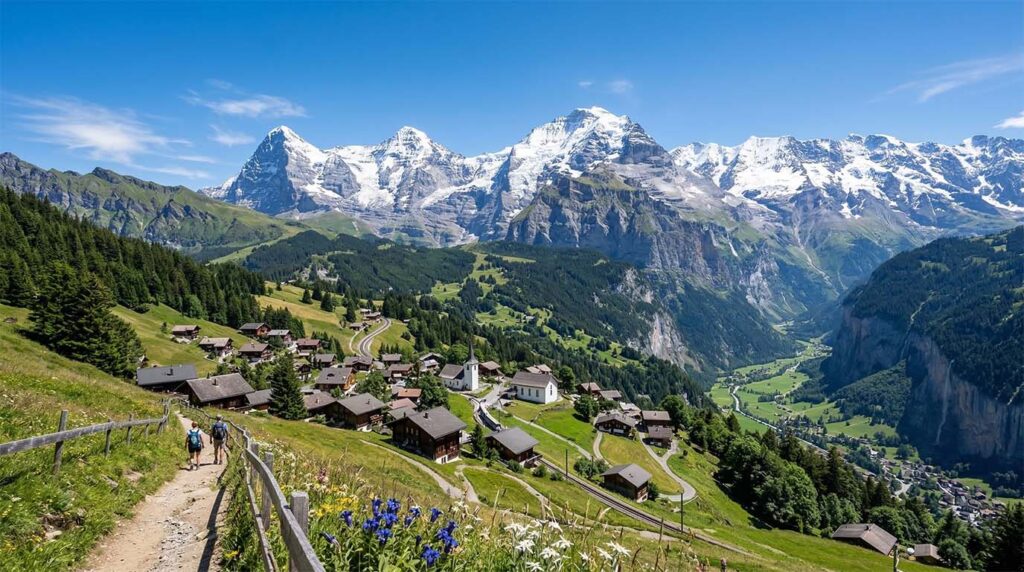
Switzerland is located in the heart of Europe and is surrounded by the Swiss Alps, which provide strong natural geographic protection.
The country also has extremely advanced infrastructure, emergency planning systems, and one of the most reliable transportation networks in Europe.
Immigration Opportunities
Switzerland allows skilled professionals to work and live in the country, particularly in sectors such as finance, engineering, pharmaceuticals, and technology.
However, immigration policies are relatively strict, and the government sets annual quotas for foreign workers, especially for non-EU citizens.
Pros
- Over 200 years of political neutrality
- One of the strongest and most stable economies in the world
- Extremely low crime rate and high quality of life
Cons
- Very high cost of living (often $4,500+ per month in major cities)
- Strict immigration quotas for non-EU citizens
- Mandatory military service for Swiss male citizens
4. Ireland
Overview
Ireland is a peaceful island nation in Western Europe with a population of about 5 million people. The country is known for its strong democratic system, growing technology sector, and high quality of life.
Ireland also ranks among the top 5 most peaceful countries in the world according to the Global Peace Index, reflecting its political stability and low crime levels.
Why Ireland Could Be Safe
Ireland has maintained a long tradition of military neutrality for many decades, which reduces the likelihood of direct involvement in large global conflicts.
Because it is not heavily militarized and avoids major military alliances, Ireland is often viewed as a relatively low-risk country during international tensions.
Political Position
Ireland is a member of the European Union, but it is not part of NATO. Instead, the country focuses mainly on peacekeeping missions and international diplomacy.
Irish forces have participated in United Nations peacekeeping operations for more than 60 years, which highlights the country’s commitment to global stability rather than military conflict.
Geographic Advantages
Ireland’s geographic position also provides certain advantages. As an island located on the western edge of Europe along the Atlantic Ocean, it benefits from natural ocean barriers that separate it from many continental conflict zones.
This location also provides access to major trade routes while maintaining relative geographic distance from geopolitical hotspots.
Immigration Opportunities
Ireland offers several immigration pathways, particularly for skilled professionals. Programs like the Critical Skills Employment Permit allow highly qualified workers in sectors such as technology, healthcare, engineering, and finance to live and work in Ireland.
The country has also become a major European technology hub, hosting offices of global companies like Google, Apple, Facebook, and Microsoft.
Pros
- Ranked among the top 5 most peaceful countries globally
- Strong technology and finance sectors
- English-speaking country with a stable democratic government
Cons
- Housing shortages in cities like Dublin
- Frequent rainy weather due to Atlantic climate
- Rising cost of living in major urban areas
5. Canada
Overview
Canada is the second-largest country in the world by land area, covering about 9.98 million square kilometers, with a population of more than 40 million people. The country is widely known for its natural resources, multicultural society, and high standard of living.
Canada also ranks among the top 15 most peaceful countries in the world according to the Global Peace Index, reflecting its political stability and strong democratic institutions.
Why Canada Could Be Safe
Canada’s vast territory and relatively low population density of about 4 people per square kilometer provide natural advantages during periods of global instability.
The country also possesses abundant natural resources, including forests, minerals, oil, and one of the world’s largest freshwater supplies. In fact, Canada holds around 20% of the world’s freshwater resources, which is an important advantage during global crises.
Political Position
Canada is a member of NATO and the G7 group of major economies, and it maintains strong diplomatic and economic relationships with many countries.
Despite its military alliances, Canada has also built a global reputation for peacekeeping missions and international diplomacy, which strengthens its image as a stable and cooperative nation.
Geographic Advantages
Canada’s geography provides several strategic advantages. The country has enormous forests, lakes, and agricultural land, which help support strong food production and resource independence.
Its northern location and vast land area also mean that many regions remain sparsely populated, reducing risks associated with overcrowding during crises.
Immigration Opportunities
Canada has one of the most open and structured immigration systems in the world. Programs like Express Entry allow skilled workers to apply for permanent residency based on factors such as education, work experience, and language ability.
The Canadian government also plans to welcome hundreds of thousands of new immigrants each year, making it an attractive destination for professionals and families seeking stability and opportunity.
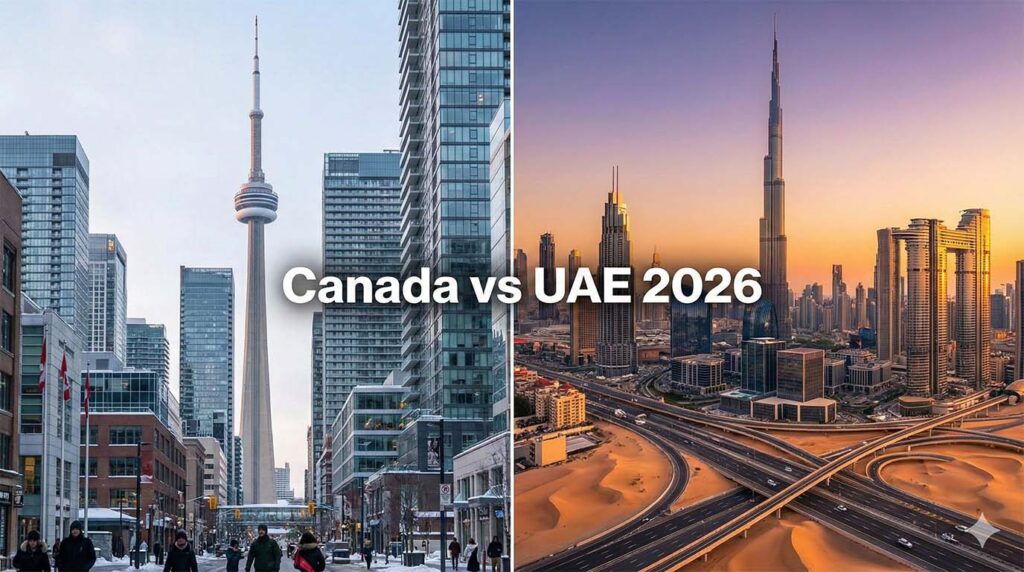
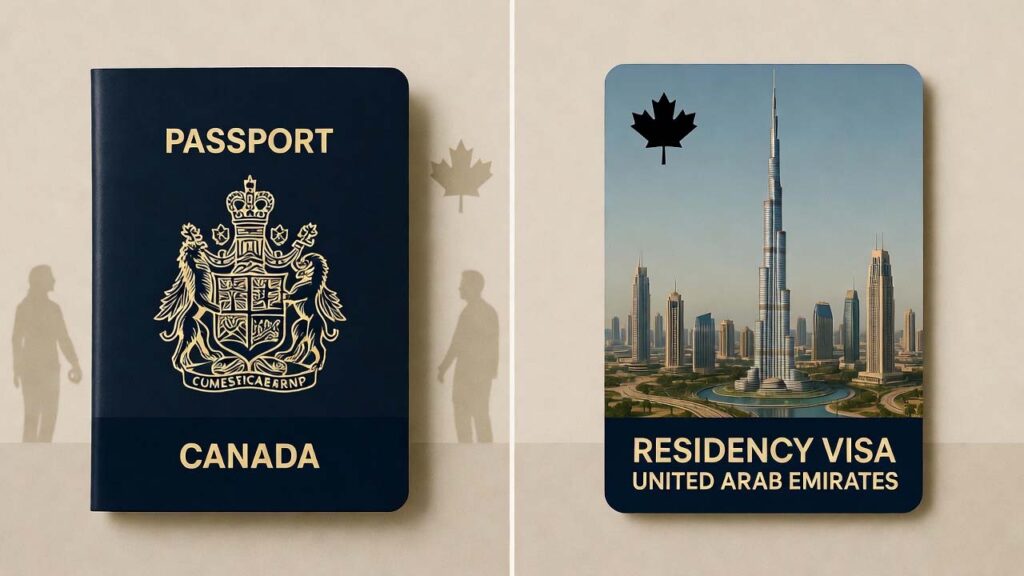
If you are considering moving abroad for better opportunities, you may also want to read our detailed comparison of Canada vs UAE to understand which country offers better salaries, taxes, and cost of living for expats.
Pros
- One of the largest and resource-rich countries in the world
- Strong public healthcare and education systems
- Welcoming immigration policies and multicultural society
Cons
- Extremely cold winters in many provinces
- High housing prices in cities like Toronto and Vancouver
- Some remote regions have limited infrastructure and job opportunities
6. Portugal
Overview
Portugal is a peaceful country located in Southern Europe with a population of around 10.3 million people. The country is known for its beautiful Atlantic coastline, historic cities like Lisbon and Porto, and a relaxed Mediterranean lifestyle.
Portugal consistently ranks among the top 10 most peaceful countries in the world according to the Global Peace Index, reflecting its political stability and low crime levels.
Why Portugal Could Be Safe
Portugal is located on the western edge of Europe along the Atlantic Ocean, which places it relatively far from many major geopolitical conflict zones in Eastern Europe and Asia.
Because of this geographic position, Portugal is often considered one of the safer locations in Europe during periods of global instability.
Political Position
Portugal is a member of the European Union and NATO, but it is widely recognized for maintaining peaceful international relations and focusing on diplomacy and cooperation rather than military expansion.
The country also has a stable democratic government and strong political institutions.
Geographic Advantages
Portugal benefits from a mild Mediterranean climate, which supports agriculture, fishing, and tourism industries.
The country also has access to the Atlantic Ocean, fertile farmland, and renewable energy sources, which contribute to stable food production and energy security.
Immigration Opportunities
Portugal has become one of the most popular destinations in Europe for international migrants, retirees, and digital nomads.
Programs like the Golden Visa program and the D7 visa allow investors, remote workers, and retirees to live in Portugal and potentially obtain long-term residency or citizenship.
Pros
- Ranked among the top 10 most peaceful countries globally
- Lower cost of living compared to many Western European countries
- Access to European Union travel and opportunities
Cons
- Risk of wildfires during extremely hot summer months
- Smaller economy compared to major EU countries like Germany or France
- Some regions rely heavily on tourism for economic activity
7. Australia
Overview
Australia is a large island continent located in the Southern Hemisphere with a population of around 27 million people. The country is known for its modern cities, strong economy, and very high quality of life.
Australia also ranks among the top 25 most peaceful countries in the world according to the Global Peace Index, reflecting its political stability and relatively low crime rates.
Why Australia Could Be Safe
One of Australia’s biggest advantages is its geographic isolation. The country is surrounded by the Indian and Pacific Oceans and is located thousands of kilometers away from many major geopolitical conflict zones.
Because of this distance, Australia is often considered one of the safer countries during periods of global instability.
Political Position
Australia maintains strong diplomatic and defense relationships with Western allies through partnerships such as the ANZUS alliance and the Five Eyes intelligence network.
At the same time, Australia actively promotes regional stability and cooperation in the Asia-Pacific region, focusing on diplomacy and economic partnerships.
Geographic Advantages
Australia has vast land resources and is one of the world’s leading exporters of iron ore, coal, natural gas, and agricultural products.
The country also produces large quantities of food, including wheat, beef, and dairy products, which helps strengthen food security and economic resilience during global disruptions.
Immigration Opportunities
Australia uses a points-based immigration system designed to attract skilled workers from around the world.
Professionals in industries such as healthcare, engineering, information technology, and construction are often in high demand. Skilled migrants can also apply for permanent residency and citizenship pathways.
Pros
- Strong economy with one of the highest average incomes globally
- Excellent healthcare and education systems
- Beautiful natural landscapes, beaches, and outdoor lifestyle
Cons
- Large distances between major cities due to vast land area
- High housing prices in cities such as Sydney and Melbourne
- Occasional natural challenges such as droughts and bushfires
8. Norway
Overview
Norway is a Scandinavian country in Northern Europe with a population of around 5.5 million people. The country is famous for its dramatic fjords, high living standards, and strong welfare system.
Norway consistently ranks among the top 20 most peaceful countries in the world according to the Global Peace Index, reflecting its political stability and low crime rates.
Why Norway Could Be Safe
One of Norway’s biggest strengths is its strong economic stability. The country has built one of the world’s largest sovereign wealth funds from oil and gas revenues.
This fund, often called the Norwegian Government Pension Fund Global, is worth more than $1.4 trillion, helping the country maintain economic stability even during global crises.
Political Position
Norway is a member of NATO, but it is also well known for promoting diplomacy, international cooperation, and peace negotiations.
The country has played an important role in several global peace agreements, including the Oslo Accords, which strengthened its reputation as a diplomatic mediator.
Geographic Advantages
Norway’s geographic location in Northern Europe provides certain strategic advantages. The country has a rugged mountainous landscape, long coastlines, and relatively low population density.
Norway also generates more than 90% of its electricity from hydropower, making it one of the most energy-independent countries in Europe.
Immigration Opportunities
Norway offers work permits and residence opportunities for skilled professionals, particularly in sectors such as energy, engineering, maritime industries, and technology.
Although immigration policies are structured and selective, skilled workers can apply for long-term residency and employment permits.
Pros
- Extremely strong economy supported by a $1+ trillion sovereign wealth fund
- Very high quality of life and strong social welfare system
- Clean environment with stunning natural landscapes
Cons
- Very high taxes compared to many countries
- Cold and dark winters, especially in northern regions
- High cost of living in major cities
9. Bhutan
Overview
Bhutan is a small Himalayan kingdom located between India and China, with a population of around 780,000 people. The country is globally known for its unique development philosophy called Gross National Happiness (GNH), which prioritizes well-being, environmental protection, and cultural preservation over pure economic growth.
Bhutan also ranks among the most environmentally protected countries in the world, with strict laws to preserve forests and biodiversity.
Why Bhutan Could Be Safe
Bhutan’s biggest advantage is its mountainous geography. The country is surrounded by the Himalayan mountain range, which naturally limits access and makes large-scale military movement difficult.
Its relatively small population and peaceful political environment also reduce the likelihood of direct involvement in global conflicts.
Political Position
Bhutan follows a neutral and peaceful foreign policy, focusing on maintaining strong diplomatic relationships with neighboring countries and international organizations.
The country transitioned to a constitutional monarchy in 2008, strengthening its democratic institutions while preserving its traditional governance system.
Geographic Advantages
Bhutan’s high-altitude terrain and dense forests help protect its natural resources and ecosystems. In fact, more than 70% of Bhutan’s land area is covered by forests, making it one of the greenest countries in the world.
Bhutan is also recognized as the world’s first carbon-negative country, meaning it absorbs more carbon dioxide than it produces.
Immigration Opportunities
Bhutan has very strict immigration policies, and permanent residency for foreigners is extremely rare.
However, the country allows limited visas for tourism, cultural exchange, and certain professional activities, especially in areas related to development and environmental projects.
Pros
- One of the most environmentally protected countries in the world
- Carbon-negative nation with over 70% forest coverage
- Peaceful society with strong cultural traditions
Cons
- Limited infrastructure and economic opportunities
- Difficult mountain terrain can affect transportation
- Very strict immigration policies for foreign residents
10. Costa Rica
Overview
Costa Rica is a small but stable country located in Central America, with a population of around 5.2 million people. The country is widely known for its rich biodiversity, tropical climate, and peaceful lifestyle.
Costa Rica also ranks among the most peaceful countries in Latin America according to the Global Peace Index, reflecting its political stability and relatively low levels of violence compared to many neighboring countries.
Why Costa Rica Could Be Safe
One of Costa Rica’s most unique features is that the country abolished its military in 1948. Instead of spending heavily on armed forces, the government has invested more in education, healthcare, and environmental protection.
This long-standing commitment to peace has helped Costa Rica maintain political stability and avoid involvement in many regional conflicts.
Political Position
Costa Rica follows a neutral foreign policy and focuses on diplomacy, international cooperation, and sustainable development.
The country is also recognized globally for its strong democratic institutions and environmental policies.
Geographic Advantages
Costa Rica benefits from fertile land, tropical forests, and strong agricultural production. Major exports include coffee, bananas, pineapples, and other agricultural products, which help support the country’s economy.
The country also protects more than 25% of its land through national parks and nature reserves, making it one of the world’s leading conservation-focused nations.
Immigration Opportunities
Costa Rica offers several residency programs for foreigners. Popular options include retirement visas, investor residency programs, and digital nomad visas for remote workers.
These programs make Costa Rica an attractive destination for retirees, entrepreneurs, and international professionals.
Pros
- One of the most peaceful countries in Latin America
- Warm tropical climate with beautiful beaches and rainforests
- Relatively affordable healthcare and strong environmental protection
Cons
- Risk of hurricanes and tropical storms during certain seasons
- Income inequality in some regions
- Smaller economy compared to major developed countries
Comparison Table: Top 10 Safest Countries if World War 3 happens (2026–2030)
The table below compares the safest countries if World War 3 happens based on geography, economy, and immigration opportunities.
| Country | Global Peace Index Rank | Geographic Safety | Economic Stability | Immigration Options | Avg Cost of Living (Monthly) | Population |
| Iceland | #1 | Remote North Atlantic island | Renewable energy economy | Skilled visas, digital nomad visa | $3,500 – $4,000 | 380,000 |
| New Zealand | #3 | Remote South Pacific islands | Strong developed economy | Points-based immigration | $3,000 – $3,800 | 5.2 million |
| Switzerland | #5 | Alpine mountain protection | One of the strongest global economies | Skilled worker permits | $4,500 – $5,500 | 8.8 million |
| Ireland | #2 | Atlantic island location | Fast-growing EU economy | Critical skills employment visa | $3,000 – $3,500 | 5 million |
| Canada | #11 | Large territory, low population density | Resource-rich economy | Express Entry immigration | $2,800 – $3,500 | 40 million |
| Portugal | #7 | Western European coastal country | Stable EU economy | Golden Visa, D7 visa | $1,800 – $2,500 | 10 million |
| Australia | #22 | Isolated island continent | Strong developed economy | Skilled migration system | $3,200 – $4,000 | 27 million |
| Norway | #13 | Northern European geography | Wealthy welfare economy | Skilled worker programs | $4,000 – $4,800 | 5.5 million |
| Bhutan | #18 | Himalayan mountain isolation | Small but stable economy | Limited immigration | $1,200 – $1,800 | 800,000 |
| Costa Rica | #22 | Central American tropical region | Tourism-based economy | Residency programs | $1,500 – $2,200 | 5 million |
Note:
- Geographic Safety considers distance from major conflict zones.
- Immigration Options indicates how easy it is for foreign nationals to relocate.
Why Some Countries Remain Neutral in Wars
Some countries choose a policy called neutrality, which means they avoid joining military alliances or taking sides in international conflicts.
Countries like Switzerland, Ireland, Austria, and Costa Rica have maintained neutrality for many decades. This strategy allows them to focus more on diplomacy, peace negotiations, and international cooperation.
Neutral countries often benefit from:
- Reduced risk of being targeted in military conflicts
- Strong diplomatic relationships with multiple countries
- Greater political stability during international crises
For example, Switzerland has hosted many global peace talks and diplomatic negotiations, which strengthens its reputation as a neutral and safe nation.
Countries That May Be Most Affected by Global Conflicts
While some regions may remain relatively stable, others are more likely to experience instability during global conflicts.
Areas that historically face higher risk include:
- Regions with ongoing political tensions
- Countries located near major military powers
- Areas with existing civil conflicts or economic instability
Examples often mentioned in geopolitical risk reports include parts of Eastern Europe, the Middle East, and certain regions in Africa where conflicts and political tensions already exist.
This is one reason why countries that are geographically distant from these regions—such as New Zealand or Iceland—are often considered safer options.
Tips for Choosing a Safe Country During Global Uncertainty
If someone is considering moving abroad for long-term security or stability, several factors should be carefully evaluated.
1. Check Political Stability
Countries with stable governments and strong democratic institutions usually handle crises more effectively.
2. Look at Geography
Island nations or remote countries often face fewer risks during large international conflicts.
3. Consider Immigration Policies
Some countries make it easier for skilled workers, investors, or remote professionals to relocate.
4. Evaluate Economic Strength
A strong and diversified economy helps countries manage supply shortages, economic disruptions, and financial crises.
5. Research Cost of Living
Even if a country is safe, living expenses may be high. It’s important to balance safety with affordability.
6. Plan Long-Term Residency
If relocation becomes necessary, having legal residency or citizenship options can provide additional security.
Future Outlook: Which Regions May Be Most Stable by 2030
Looking toward the future, many analysts believe that geographic stability, strong economies, and renewable energy resources will play a major role in determining which countries remain stable.
Regions expected to remain relatively stable include:
- Northern Europe (Norway, Iceland)
- Oceania (Australia and New Zealand)
- Parts of Western Europe (Portugal and Ireland)
- Resource-rich countries like Canada
Countries that have strong infrastructure, energy independence, and sustainable food production will likely be better prepared for global challenges.
Safest Regions of the World During Global Conflict
While individual countries matter, certain regions of the world may remain more stable during large global conflicts.
Oceania
Countries like New Zealand and Australia are often considered among the safest because of their geographic isolation and strong economies.
Northern Europe
Nations such as Iceland and Norway benefit from strong infrastructure, stable governments, and large renewable energy resources.
Western Europe
Countries like Portugal and Ireland are located on the western edge of Europe and have strong democratic systems.
Remote Mountain Regions
Countries like Bhutan have natural geographic barriers that make them less likely to be directly involved in global conflicts.
These regions combine political stability, strong economies, and geographic advantages, which may help them remain relatively secure even during periods of global tension.
If you are exploring international work opportunities, you may also want to compare different destinations. Our detailed guide on Canada vs UAE explains which country offers better salaries, taxes, and living conditions for expats.
Conclusion: Safest Countries to Consider for Long-Term Stability
Predicting the future of global conflicts is never easy. However, by analyzing factors such as political neutrality, geographic isolation, economic strength, and immigration opportunities, we can better understand which places may remain stable during uncertain times.
Countries like Iceland, New Zealand, and Switzerland are often considered among the safest countries if World War 3 happens, mainly because of their strong political stability, peaceful policies, and natural geographic protection.
At the same time, nations such as Canada, Portugal, and Australia also rank among the safest countries during global conflict, thanks to their strong economies, natural resources, and well-structured immigration systems.
For people planning long-term relocation or seeking stability, many experts believe that these nations could remain some of the safest countries to live in by 2030.
Of course, no country is completely immune to global challenges. But understanding these factors can help individuals and families make smarter decisions about safety, stability, and future opportunities in an uncertain world.
Frequently Asked Questions (FAQ)
Which country is safest if World War 3 happens?
Countries such as Iceland, New Zealand, and Switzerland are often considered among the safest due to their geographic isolation, political neutrality, and strong economic stability.
What are the safest countries during global conflict?
Some of the safest countries during global conflict include Iceland, New Zealand, Switzerland, Ireland, Canada, Portugal, Australia, Norway, Bhutan, and Costa Rica.
Which country is safest in Europe during a war?
In Europe, countries like Switzerland, Ireland, and Portugal are often considered safer because of their political stability, geographic location, and peaceful foreign policies.
What is the safest island country in the world?
Island nations such as Iceland and New Zealand are frequently ranked among the safest because they are geographically isolated and far from major global conflict zones.
Are neutral countries safer during wars?
Neutral countries usually have a lower risk of becoming direct targets in wars because they avoid military alliances and focus on diplomacy and peacekeeping.
What makes a country safe during global conflict?
Important factors include geographic isolation, political stability, strong economies, natural resources, energy independence, and effective governance.
Can remote countries survive a nuclear war?
While no country can be completely immune to global conflict, remote countries with strong infrastructure and food production systems may have better chances of maintaining stability.
Which countries have the most natural protection during war?
Countries with mountains, oceans, or remote locations—such as Switzerland, Bhutan, Iceland, and New Zealand—benefit from natural geographic protection.
Which countries are safest to live in by 2030?
Experts often highlight countries such as Canada, New Zealand, Iceland, Norway, and Switzerland as stable and secure places to live in the coming decades.
Is Canada a safe country during global conflict?
Canada is often considered relatively safe due to its large territory, abundant natural resources, strong economy, and stable democratic government.
If global tensions continue rising, planning for safety and stability becomes more important than ever.
Which country do you think would be the safest during a global conflict? Share your thoughts in the comments.