If you’re deciding between RTX Spark vs MacBook Pro, you’re asking the most interesting laptop question of 2026. Nvidia’s first Windows laptop chip, RTX Spark, ships in October. It’s aimed squarely at the MacBook Pro M5 Pro, which Apple released in March. Both chips are Arm-based, both use unified memory, and at the entry level both are expected to cost close to the same amount.
This guide skips the chip-vs-chip benchmark debate. It asks a practical question instead: if you have about $2,000–$2,500 to spend, which laptop is the better buy for your kind of work?
RTX Spark vs MacBook Pro: Quick Answer
- If you game on your laptop, or your work depends on Nvidia’s CUDA tools → an RTX Spark laptop.
- If you want the longest battery life, a proven platform, and apps that just work today → the MacBook Pro M5 Pro.
- For most people, the MacBook Pro M5 Pro is the safer pick right now. It has a known price and months of real-world reviews, and it’s strong on CPU performance and battery life. RTX Spark could be the better deal for gamers and AI developers, but only once real prices and independent reviews arrive.
RTX Spark vs MacBook Pro: Specs at a Glance
| Feature | RTX Spark laptops (N1X) | MacBook Pro 14″ M5 Pro |
|---|---|---|
| Operating system | Windows 11 on Arm | macOS Tahoe |
| CPU | 18-core (base) or 20-core Grace Arm CPU | 15-core (base) or 18-core Apple CPU |
| GPU | Blackwell RTX: 5,120 or 6,144 CUDA cores | 16-core or 20-core Apple GPU |
| Unified memory | 24–32GB (base chip); up to 128GB (top chip) | 24GB standard; up to 128GB |
| Memory bandwidth | ~273GB/s | 307GB/s (up to 614GB/s on higher configs) |
| AI performance | Up to 1 petaflop FP4 (Nvidia claim) | Up to 3.9x faster LLM prompt processing vs M4 Pro (Apple claim) |
| Gaming upscaling | DLSS 4.5 | MetalFX |
| Battery | “All-day” (Nvidia claim; varies by laptop) | Up to 22 hrs video, 14 hrs web (72.4Wh) |
| Weight | Varies by model (ASUS ProArt P16: under 4 lbs) | 3.5 lbs |
| Starting price (US) | Expected around $1,999–$2,499 (not official) | $2,199 (24GB / 1TB) |
| Availability | Rolling out from October 2026 | On sale since March 11, 2026 |
Price and Value
The MacBook Pro 14-inch with M5 Pro starts at $2,199, according to Apple’s March 2026 announcement. That price includes 24GB of memory and a 1TB SSD. The 16-inch starts at $2,699.
RTX Spark pricing is still the biggest unknown. Nvidia hasn’t announced prices, and it doesn’t sell the laptops directly. ASUS, Dell, HP, Lenovo, Microsoft, MSI and others do. Analyst estimates put entry-level laptops with the lower-tier chip at roughly $1,999–$2,499, and high-memory models at well over $3,000. Early preorder batches from ASUS and MSI reportedly sold out, so launch stock and discounts may be limited at first.
If the cheapest RTX Spark laptops arrive at or under $2,000, they’ll undercut the MacBook Pro. If they land near $2,500, the Mac becomes the better value.
Performance: CPU, Graphics and AI
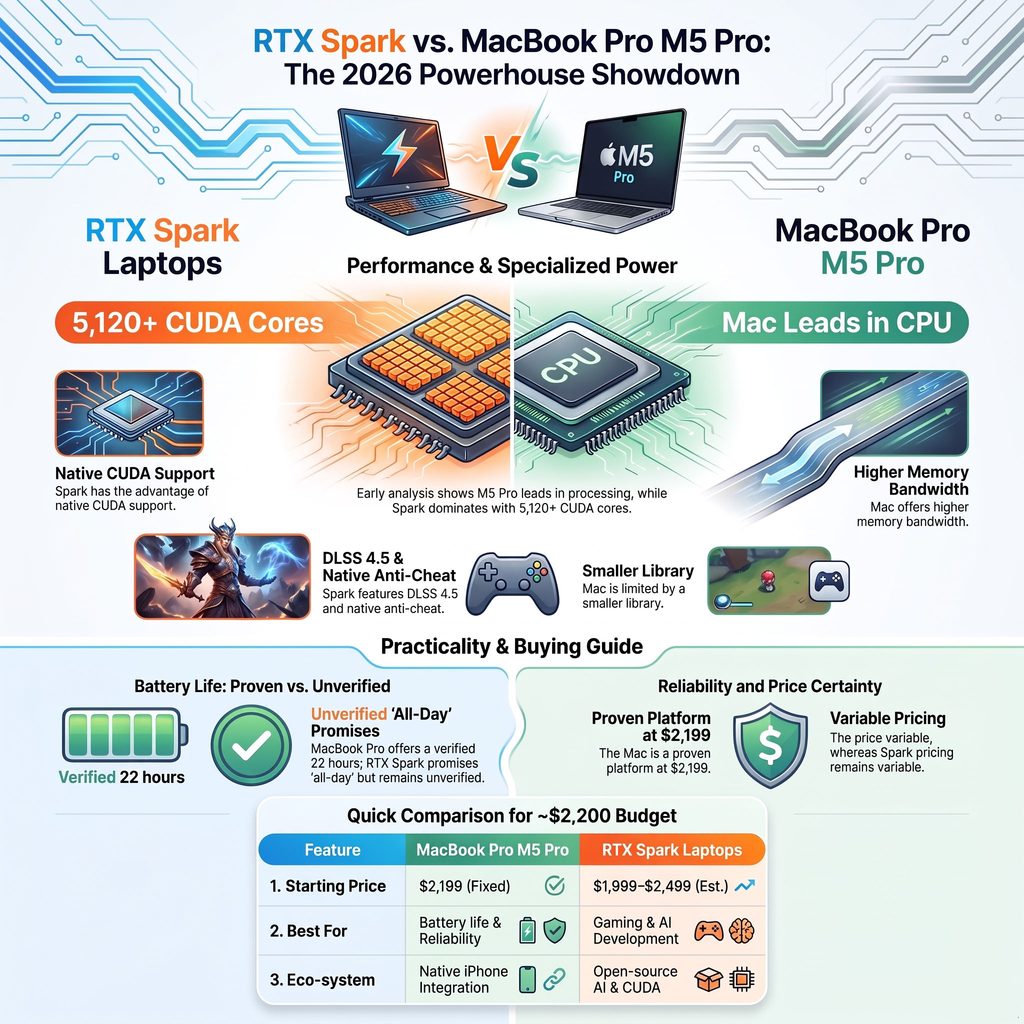
CPU: Early reports and analysis suggest Apple still leads on CPU work. HotHardware notes that RTX Spark’s CPU generally trails the M5 Pro in CPU-focused benchmarks. For code compiling, photo exports and heavy multitasking, the MacBook Pro has the edge.
Graphics: This is where Nvidia is strongest. Even the base RTX Spark chip has a full Blackwell GPU with 5,120 CUDA cores, and Nvidia says laptops can hit around 100fps in many games at 1440p using DLSS and ray tracing. Apple’s GPU is capable, but most PC games still aren’t built for Mac.
AI: Both chips are built for running AI models on the laptop itself. The M5 Pro’s standard memory bandwidth is higher (307GB/s vs about 273GB/s), which helps text-generation speed. RTX Spark’s advantage is software: most open-source AI tools are built first for Nvidia’s CUDA platform. Nvidia’s launch announcement positions RTX Spark as a PC for running AI agents locally.
Gaming
For gamers, this comparison is fairly one-sided. RTX Spark supports DLSS 4.5, and Nvidia says the major anti-cheat and DRM systems (Easy Anti-Cheat, BattlEye, Denuvo) will run natively on Windows on Arm. That matters for games like Fortnite and Valorant, which previously couldn’t run on Arm laptops at all.
One caveat: the games themselves still run through Microsoft’s Prism translation layer, because almost no PC games have native Arm versions yet. Some performance is lost in translation, and a few titles may still not work at launch.
The MacBook Pro plays the growing list of native Mac games well, but its library is far smaller. If blockbuster releases matter to you (see how the next big one stacks up in our GTA 6 vs GTA 5 comparison), a Windows machine gives you far more options.
Battery Life and Portability
Apple’s figures for the 14-inch M5 Pro are up to 22 hours of video playback and 14 hours of web browsing from a 72.4Wh battery, at 3.5 lbs. Independent reviews have backed up Apple’s reputation here.
Nvidia promises “all-day battery life,” but RTX Spark laptops use a 45–80W chip, and battery size varies by manufacturer. Until independent reviews are out, the MacBook Pro is the safer choice if you work away from a plug.
Software and Ecosystem
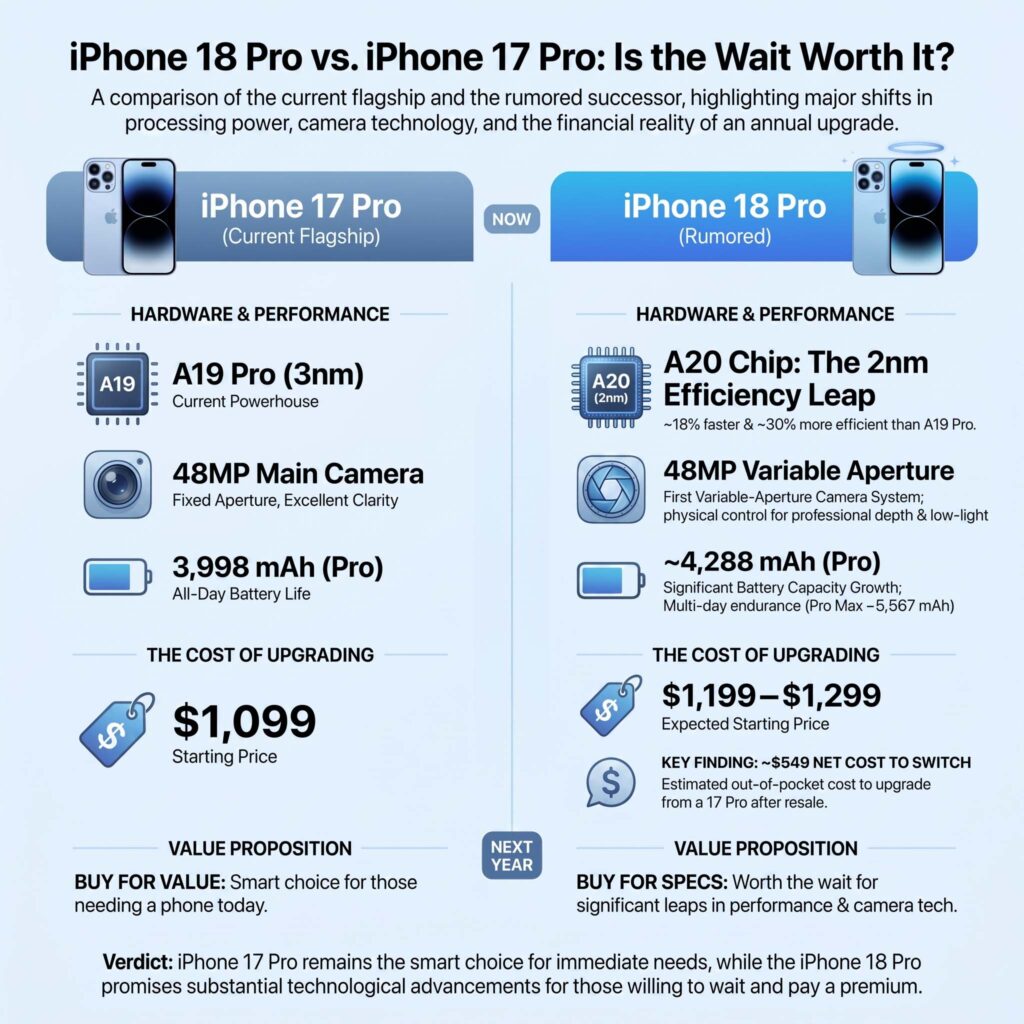
The MacBook Pro runs macOS, where almost every major app now runs natively on Apple silicon. If you already use an iPhone (see our iPhone 18 Pro vs iPhone 17 Pro breakdown), features like AirDrop, Handoff and iPhone Mirroring are a real everyday advantage.
RTX Spark runs Windows 11 on Arm. Compatibility has improved a lot, but older x86 apps, niche drivers and some specialist software may run slower under emulation or not at all. Check that your must-have apps work before you buy.
The Original Angle: What Does $2,200 Actually Buy You?
Spec sheets don’t answer the real question, so here’s a budget-first comparison. Assume you have about $2,200, the price of the base MacBook Pro 14-inch M5 Pro.
Step 1: What you get for the money
| At ~$2,200 | MacBook Pro 14″ M5 Pro | Entry RTX Spark laptop (expected) |
|---|---|---|
| Memory | 24GB | 24–32GB |
| Storage | 1TB | Varies (often 1TB at this tier) |
| Price certainty | Fixed at $2,199 | Estimated $1,999–$2,499 |
| Reviews available | Six months of reviews | None yet (launching October) |
Step 2: How big an AI model can you run locally?
A useful rule of thumb: a 4-bit AI model needs about 0.5–0.6GB of memory per billion parameters, plus room for the operating system and apps. Here’s what that means for each memory size:
| Memory | Leave ~8GB for OS/apps | Largest 4-bit model that fits (approx.) |
|---|---|---|
| 24GB | ~16GB usable | ~25–30 billion parameters |
| 32GB | ~24GB usable | ~40–45 billion parameters |
| 128GB | ~120GB usable | ~200 billion parameters |
This shows why the base configurations are closer than they look. At 24GB, both laptops handle the same class of models.

An RTX Spark laptop with 32GB for about the same money would be a real advantage for AI tinkerers. That depends on final pricing, so check the specs before you buy.
Step 3: Match it to your use
| If you mainly… | Better pick at ~$2,200 | Why |
|---|---|---|
| Play PC games | RTX Spark | DLSS, native anti-cheat, far bigger game library |
| Build with CUDA / open-source AI tools | RTX Spark | Nvidia’s software stack runs natively |
| Edit video or photos on battery | MacBook Pro | Proven battery life, strong CPU |
| Write, study, browse, do office work | MacBook Pro | Reliable, lighter, known price |
| Use an iPhone every day | MacBook Pro | Ecosystem features |
Verdict: Which Should You Buy?
- Choose an RTX Spark laptop if you game seriously, depend on Nvidia’s AI tools, or want a Windows laptop with a truly powerful GPU and no bulky separate graphics chip. Wait for the first independent reviews and real prices before you commit.
- Choose the MacBook Pro M5 Pro if you want the best battery life, strong CPU performance and a platform where your apps are guaranteed to work, all at a fixed $2,199.
- For most people, the MacBook Pro M5 Pro is the smart pick today. It’s proven and fairly priced for what it offers. RTX Spark is the most exciting Windows laptop chip in years, but first-generation hardware on a new platform comes with risk. The best move for most Windows fans is to wait a few weeks for reviews.
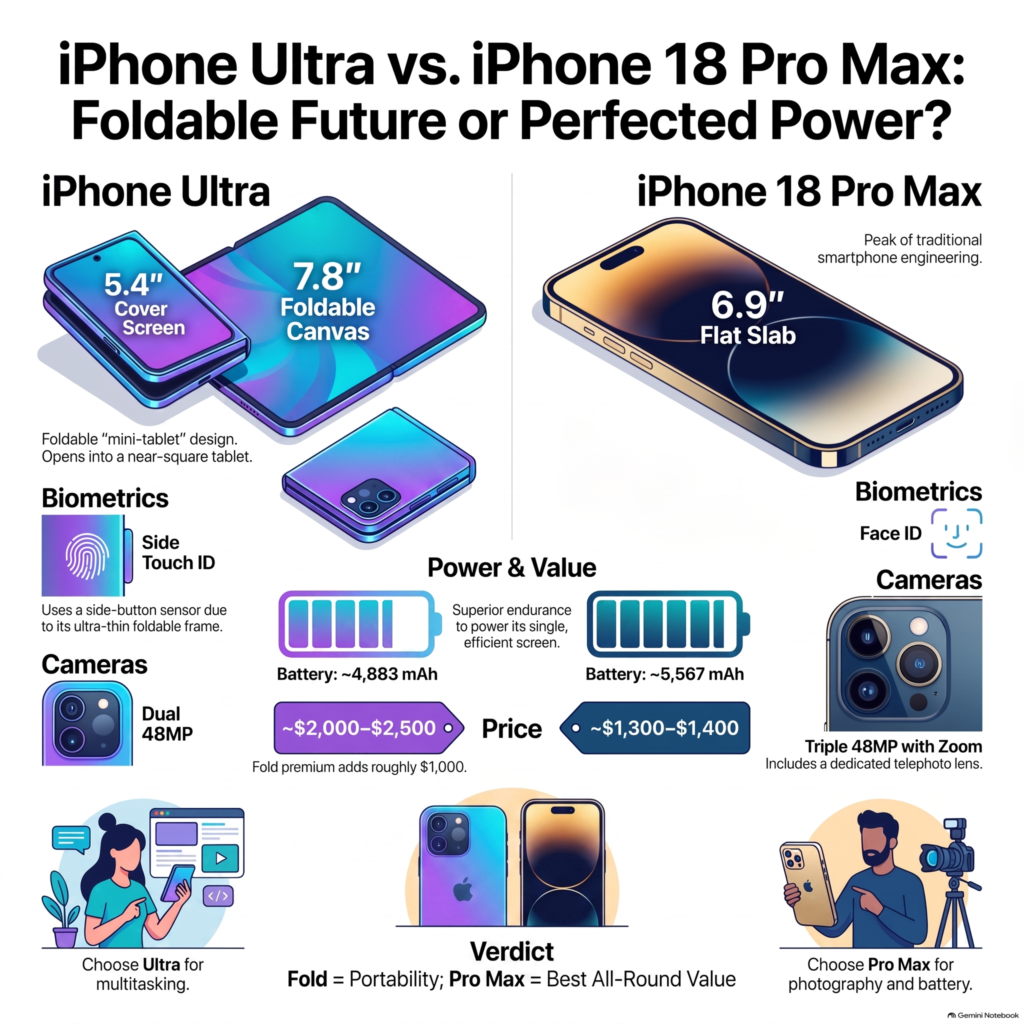
Interested in how Apple’s pricing compares across its lineup? Our iPhone Ultra vs iPhone 18 Pro Max guide looks at the same question for Apple’s most expensive phones.
FAQ
Is RTX Spark faster than the Apple M5 Pro?
It depends on the task. Early analysis suggests the M5 Pro is faster for CPU-heavy work, while RTX Spark is expected to be stronger in graphics, gaming and CUDA-based AI. Independent laptop reviews will give a clearer answer after launch.
How much do RTX Spark laptops cost?
Official US prices haven’t been announced. Estimates put entry-level models at about $1,999–$2,499, and high-end models with 128GB of memory at well over $3,000. Prices are set by each laptop maker.
Can RTX Spark laptops run normal Windows games?
Mostly, yes. Games run through Microsoft’s Prism emulation, and Nvidia says anti-cheat systems like Easy Anti-Cheat and BattlEye work natively. That covers titles like Fortnite and Valorant. Some games may still have issues at launch.
Which has better battery life?
The MacBook Pro 14-inch M5 Pro is rated at up to 22 hours of video playback. RTX Spark laptops promise “all-day” battery life, but results will vary by model and haven’t been independently tested yet.
When can I buy an RTX Spark laptop?
The first models, including laptops from ASUS, MSI and Microsoft’s Surface Laptop Ultra, are expected from October 2026, with more arriving later in the year.
Disclaimer
This comparison was written before RTX Spark laptops went on sale. Specifications and performance claims come from Nvidia, Apple and early third-party reporting, and RTX Spark prices are estimates, not official figures. We aim to present both options fairly and accurately, but details may change after launch. Check the official product pages and independent reviews, and do your own research, before you buy.